
The Proven Business Growth Framework: 5 Steps Small Business Consulting Actually Uses to Increase Your Bottom Line
You're working harder than ever, but your profit margins aren't reflecting it. Sound familiar?
Here's the truth most business owners don't want to hear: working harder rarely equals growing faster. What actually moves the needle is working strategically: and that's exactly where business growth consulting comes in.
After helping hundreds of entrepreneurs scale their operations, we've identified the exact framework that separates businesses that plateau from those that thrive. These aren't theoretical concepts: this is the practical, results-driven roadmap that small business consulting professionals use every single day to increase bottom lines.
Let's break it down.
Step 1: Get Crystal Clear on Your Numbers (Even If Math Makes You Queasy)
You can't improve what you don't measure. Period.
Most small business owners operate in financial fog. They have a general sense of whether things are "good" or "bad," but they can't tell you their exact profit margins, cash flow patterns, or where money is actually leaking out of their business.

This is where everything starts: with clean, accurate bookkeeping. Before you can implement any growth strategy, you need to know where you stand financially. That means:
Real-time visibility into cash flow: When can you actually afford that new hire? Should you invest in marketing this quarter or next?
Accurate expense tracking: Are you spending $500 or $5,000 on software subscriptions? Many business owners genuinely don't know.
Payroll management that doesn't eat your time: Processing payroll manually is like counting grains of sand: tedious, time-consuming, and prone to costly errors.
Professional payroll and bookkeeping services aren't just about compliance (though that matters too). They're about creating the financial foundation that makes smart growth decisions possible. When your books are clean and current, you can spot opportunities and problems before they impact your bottom line.
Step 2: Define Your Growth Vision and Set Real KPIs
"I want to grow my business" isn't a strategy: it's a wish.
Business strategy consulting starts with getting brutally specific about what growth actually looks like for your business. Revenue targets? New market expansion? Profit margin improvement? Building a team so you're not the bottleneck?
Here's what this step looks like in practice:
Map your 1-year, 3-year, and 5-year vision. Where do you want this business to take you? What does success look like on a random Tuesday in 2028? Get specific: down to revenue numbers, team size, and how much time you're actually working.
Identify your key performance indicators. Choose 3-5 metrics that actually matter. For most businesses, these include monthly recurring revenue, customer acquisition cost, customer lifetime value, and profit margins. Track these religiously.
Create quarterly milestones. Break down your annual goals into 90-day sprints. This makes massive objectives feel manageable and keeps you accountable.
The businesses that grow aren't just the ones with big dreams: they're the ones who translate those dreams into measurable milestones and then relentlessly track progress.
Step 3: Optimize Your Operations and Sales Systems
This is where business consulting services really earn their keep.
You've got ambitious goals and clean financials. Now it's time to build the operational engine that actually delivers growth. Most entrepreneurs are shocked to discover how much time and money they're wasting on inefficient processes.

Audit your time drains. Where are you personally spending time that could be automated, delegated, or eliminated? Are you manually sending invoices? Handling customer service emails that could be templated? Doing tasks that a $20/hour VA could handle?
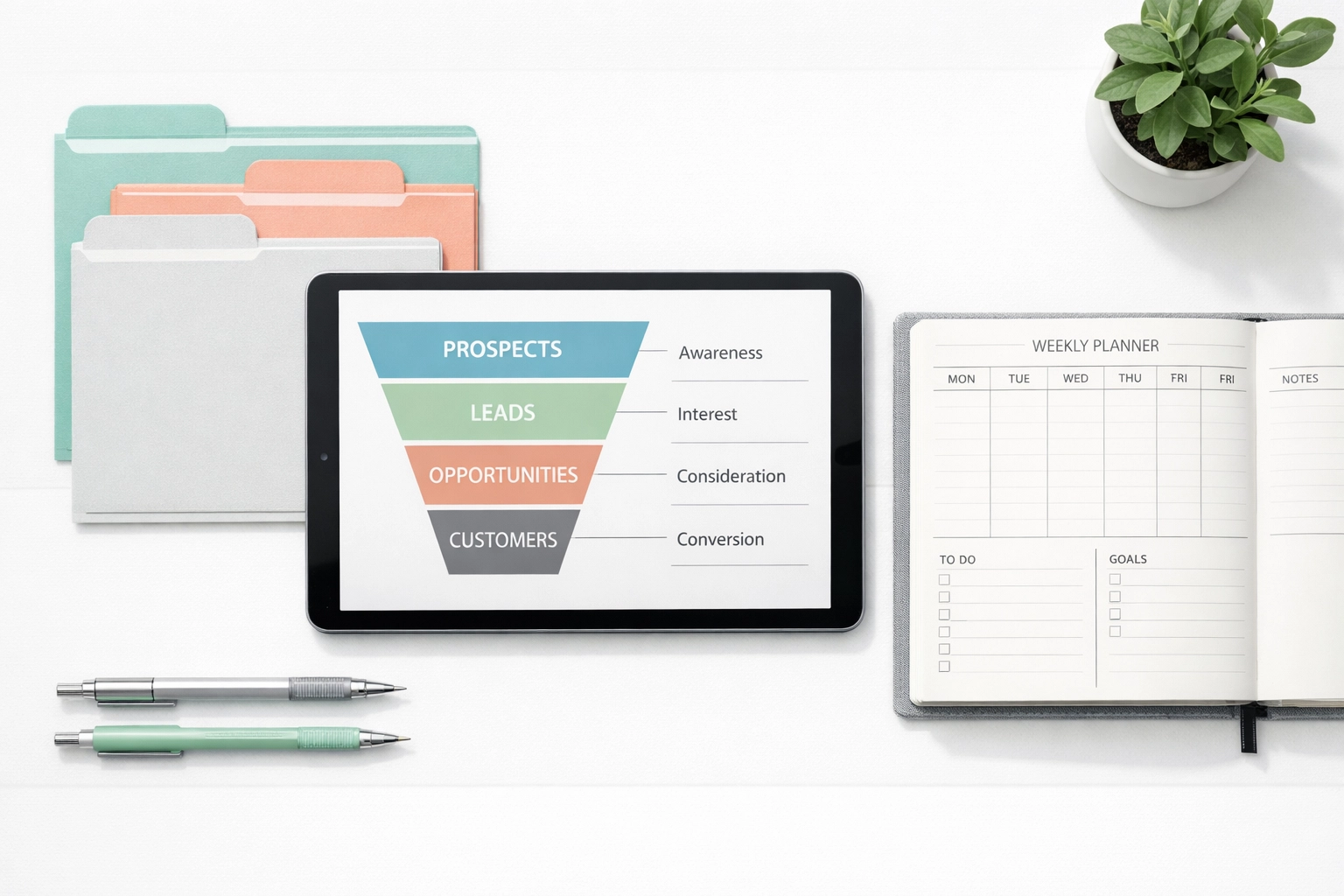
Refine your sales pipeline. Map out every step a prospect takes from "interested" to "paying customer." Where are people falling off? What's your conversion rate at each stage? Most businesses have never documented this: and it's costing them.
Standardize what works. Once you've figured out a process that delivers results, document it. Create SOPs (standard operating procedures) so you're not reinventing the wheel every time. This is how you scale beyond just you.
Business coaching helps you see the patterns you can't spot when you're buried in the day-to-day. An outside perspective identifies the operational inefficiencies that are silently killing your profit margins.
Step 4: Build the Right Foundation From the Start
If you're just starting out: or restructuring: this step is absolutely critical.
The decisions you make during business formation set the trajectory for everything that follows. Too many entrepreneurs rush through setup, pick a business structure because it "sounds right," and then spend years dealing with the consequences.
Choose the optimal business structure. Should you be an LLC? S-Corp? The answer depends on your revenue goals, tax situation, and growth plans. The right structure can save you tens of thousands in taxes annually.
Set up proper financial systems from day one. Separate business and personal accounts. Establish bookkeeping practices early. Create a payroll system that scales. Starting clean is infinitely easier than untangling a mess later.
Understand your compliance requirements. What licenses do you need? What are your tax obligations? What insurance should you carry? Getting this wrong doesn't just cost money: it can put your entire business at risk.
Business start-up assistance isn't just for rookies. Even experienced entrepreneurs benefit from expert guidance when launching something new, because the legal and financial landscape constantly evolves.
Step 5: Scale With Strategic Support (Don't Go It Alone)
Here's what separates businesses that sustain growth from those that hit a ceiling: ongoing strategic support.
Growth isn't a one-time project: it's a continuous process of identifying opportunities, solving problems, and adapting to market changes. The most successful entrepreneurs don't try to figure everything out alone.
Regular strategic check-ins keep you on track. Monthly or quarterly sessions with a business consultant force you to step back, evaluate what's working, and course-correct what isn't. It's like having a board of directors for your small business.
Expertise on demand saves money. Instead of hiring full-time experts in finance, operations, and strategy, small business consulting gives you access to that expertise exactly when you need it.
Accountability drives results. When you commit to goals with an outside advisor, you're exponentially more likely to follow through. That accountability alone is worth the investment.

Business growth consulting isn't about dependency: it's about acceleration. You could eventually figure this stuff out on your own through trial and error. But how much time and money will you waste in the process?
The Bottom Line on Growing Your Bottom Line
Growth doesn't happen by accident. It happens when you implement proven systems, make data-driven decisions, and get strategic support at crucial moments.
This five-step framework works because it addresses the real challenges small businesses face: financial clarity, strategic direction, operational efficiency, proper foundations, and ongoing support. Master these elements, and you're not just working harder: you're building a business that actually scales.
Whether you're just starting out or you've been in business for years, these principles apply. The question is: are you ready to stop spinning your wheels and start implementing a framework that actually works?
Your bottom line is waiting.
Ready to implement this framework in your business? Mulework specializes in practical, results-driven business consulting services: from start-up assistance and bookkeeping to strategic coaching that drives real growth. Let's talk about where your business is headed and how we can help you get there faster.
Comments